




Saving Water with Your Gardentub – Keep the Water Clean for Weeks or Months (Without Frequent Changes)
Introduction
The manufacturer of the Gardentub recommends changing the water every 4 days. While this keeps the water fresh in ideal conditions, it quickly becomes impractical and expensive in countries facing water scarcity such as Spain and Portugal. Frequent water changes also put unnecessary strain on the environment and your wallet.
In this comprehensive guide we show you exactly how to extend the life of your 350-litre Gardentub water significantly — often to several weeks or even months — using only gentle, natural methods that respect the polyethylene material. We focus on prevention, a simple traditional pool filter setup with a standard pump, solar energy where possible, and proven natural additives like barley straw. Everything is designed to work with the accessories that come with your Gardentub: the protective cover, shower and headrest cushion. No aggressive chemicals, no drilling, and maximum respect for the environment.
Why the Protective Cover is Your Best Friend
The included protective cover is by far the most important tool you already own. It does three crucial things at once: it blocks dust (including fine Sahara sand that is common in Spain and Portugal), keeps out leaves, pollen, insects and bird droppings, and completely prevents direct sunlight from reaching the water. Sunlight is the main driver of algae growth through photosynthesis.
Make it a strict habit: remove the cover only when you want to bathe, and put it back on immediately afterwards. Users who follow this rule consistently report that their water stays noticeably cleaner for much longer periods. In dusty or windy areas the cover alone can reduce contamination by 80-90 %. For extra protection during peak pollen season or after a sandstorm, you can place a lightweight fine-mesh net on top of the cover. These nets are inexpensive, let rainwater through if needed, and are easy to store.

Extra Practical Tips to Minimise Dirt
Proper placement and daily habits make a huge difference in a small 350-litre volume.
- Optimal Placement Choose a spot that is sheltered from strong winds and not directly under trees or roof edges. Even a few metres can reduce falling debris dramatically. If possible, position the tub in partial shade during the hottest hours — this lowers water temperature and slows both algae and bacterial growth.
- Daily Routine Skim the surface every day or after each use with a soft leaf skimmer. This removes floating particles before they sink and start decomposing. Clean the rim and outside edges weekly with a soft sponge and diluted ZEP50 — a mild, plastic-safe cleaner that will not damage the polyethylene.
- Prevent Dirt from People The biggest source of nutrients in any small bathing tub is the bather themselves. Always take a quick shower using the included shower accessory before stepping in. Thoroughly rinse off sunscreen, body lotion, sweat, sand and skin cells. This single habit dramatically reduces phosphates and organic matter that feed algae and bacteria. Rinse and dry the headrest cushion after each use so it stays fresh.
- Extra Protection Layers A simple foot-wash bucket or small basin with clean water next to the tub prevents sand and dirt from being carried in on feet. During dry, dusty periods in southern Europe, consider a second lightweight cover or mesh layer for extra defence.
Preventing and Removing Algae in Your Gardentub
Algae appear when four conditions meet: light, stagnant water, nutrients and warmth. In a 350-litre tub in a sunny climate these conditions can develop quickly, turning water green within days.
Prevention checklist
- Always use the cover to block sunlight.
- Keep the tub in partial shade when possible.
- Skim daily and shower before bathing to limit nutrients.
- Create gentle water movement with your filter pump.
- Add barley straw (50–100 grams in a mesh bag) — a completely natural algaestat that releases compounds that inhibit new algae growth without harming the plastic or beneficial bacteria. Replace the bag every 4–6 weeks.
What to do when algae do appear Start with mechanical removal: skim as much as possible and gently scrub walls and bottom with a soft sponge and diluted ZEP50. Rinse thoroughly. Keep the cover on for several days and run your circulation system longer. In most cases the water clears again within a few days. Only partially refresh the water if the situation is severe — never empty the entire tub unless absolutely necessary.
Simple Filtration & Circulation System with Traditional Pool Pump
Stagnant water is the enemy. Gentle circulation keeps oxygen levels up, prevents sediment from settling and lets beneficial bacteria do their work.
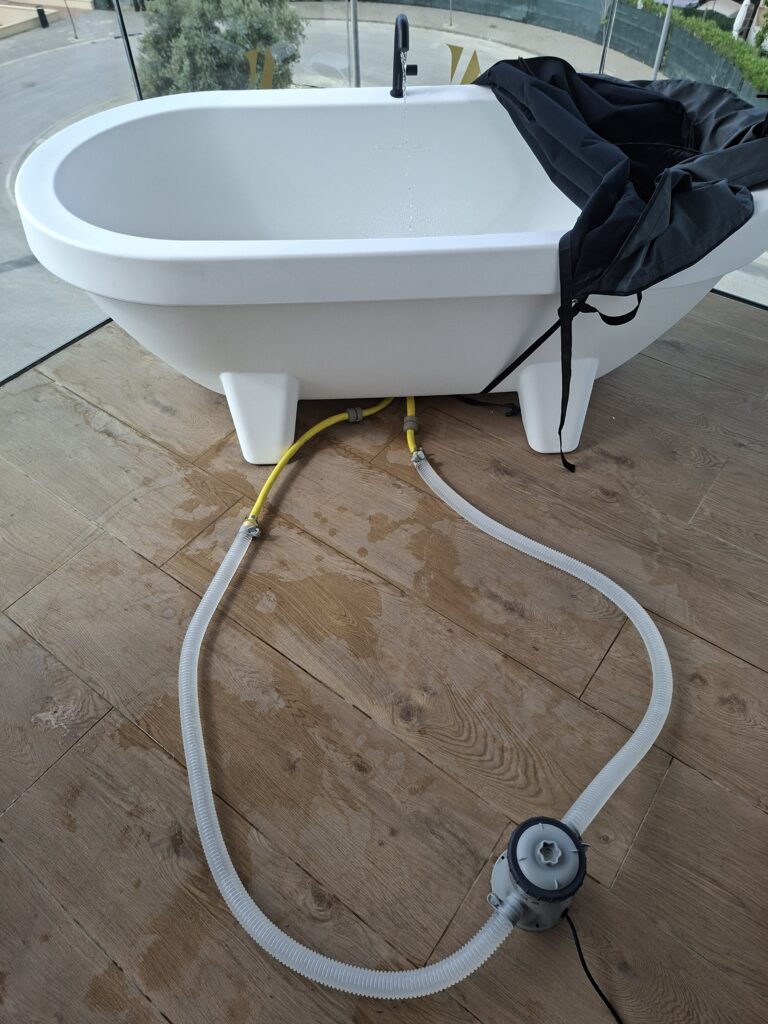
Basic principle Instead of a DIY bucket filter we now use a compact traditional swimming pool filter system with a small pump and cartridge or sand filter. This setup provides stronger and more consistent filtration while remaining easy to connect and disconnect without any modifications to the Gardentub itself.
What you need (total investment approx. €80–180)
- Small pool pump 1100–1200 L/h (quiet, low-pressure model suitable for above-ground pools).
- Compatible pool filter unit (small cartridge filter or mini sand filter – choose the smallest size available for 1–5 m³).
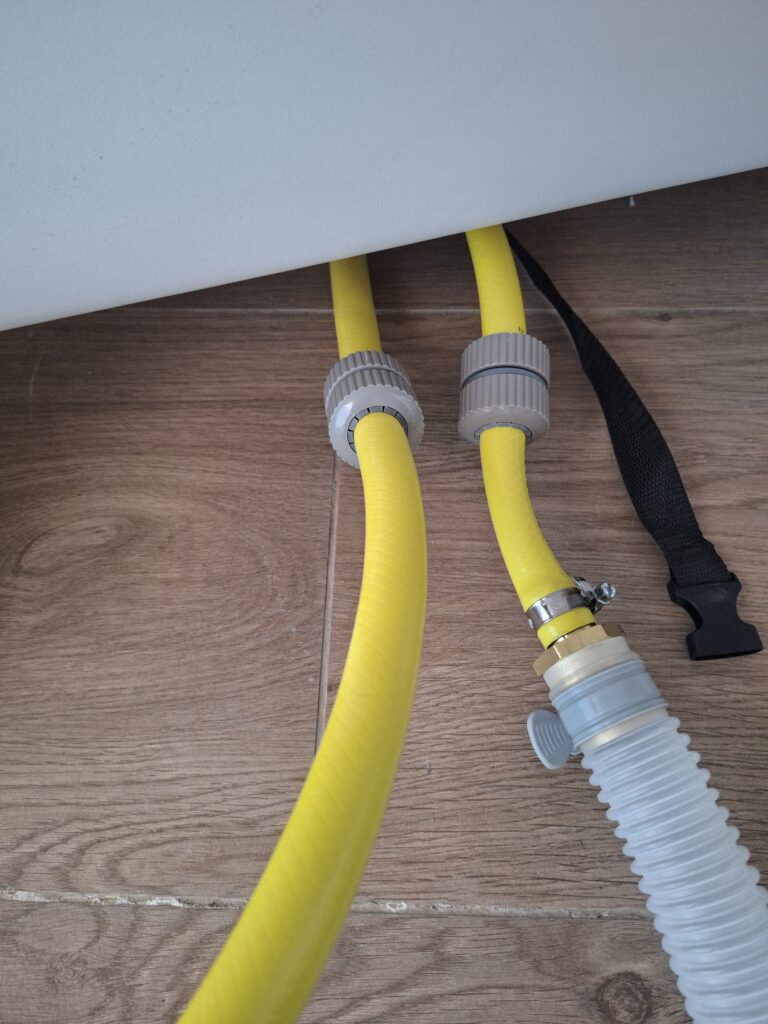
- 19 mm garden hose (preferred for low pressure and longer pump life).
- Hose clamps (16–25 mm), Gardena-compatible couplings, and reducers if needed.
- Gardena-compatible couplings
- 19–19 mm hose connector
- Reducer from 32 mm to 19 mm (if needed for your pump)
- Basic tools: knife, screwdriver
- Optional timer for automatic operation.
Step-by-step setup
- Tilt the Gardentub carefully to access the bottom drain. Cut a short 25 cm piece of 19 mm hose and connect it securely to the drain outlet with a stainless-steel clamp.
- Connect this hose to the inlet of your pool pump using the appropriate reducer and couplings.
- Attach another hose from the pump outlet to the filter unit.
- Return the filtered water to the tub via the included shower accessory or a gentle inlet hose placed near the surface or side for good water movement.
- Fill the tub with about 100 litres first, test all connections for leaks, then fill to 300–350 litres.
- Run the filter 2–3 hours every 2–3 days (or daily during hot periods). Use a timer for convenience. After use, the hoses can be disconnected and stored.
Daily / Weekly Routine
- Daily: shower before bathing, skim surface, replace cover.
- Weekly: rinse or backwash the filter cartridge according to the manufacturer’s instructions and check the barley straw bag.
- Monthly: gently clean the tub walls with ZEP50 and top up the water level as needed.
This traditional pump + filter combination gives clearer water faster than a simple bucket system and is still fully removable. Many Gardentub owners report 4–8 weeks (or longer) between full water changes when combining it with the cover and barley straw.
Healthy Water Without Killing All Bacteria
A healthy tub needs a balance of beneficial bacteria that naturally break down waste. Strong disinfectants kill both good and bad organisms, causing the water to foul again quickly.
Focus on prevention: limit nutrients, keep water moving and oxygenated, and use the cover. If the water becomes cloudy or develops an odour, add a dose of beneficial pond bacteria (available as powder or liquid for small volumes). These products are 100 % natural and safe for polyethylene.
Optional Upgrade: Small Low-Flow UV (covered in a later blog)
For even more security in very hot periods you can add a compact 5–15 W low-flow UV unit (preferably LED version) inline with the filter return hose. LED models are energy-efficient and last many years.
Lessons learned A 19 mm hose works excellently at the low pressure involved. The pump may take 2–3 minutes to prime before water flows. Always test connections thoroughly before full use.
Conclusion
By combining the protective cover, daily showering and skimming, a traditional pool pump with cartridge/sand filter, barley straw and gentle ZEP50 cleaning you can keep the water in your 350-litre Gardentub clear, fresh and safe for many weeks or months. This approach saves hundreds of litres of water, reduces costs dramatically in water-scarce regions, and is far kinder to the environment.
The Gardentub becomes a sustainable luxury instead of a high-maintenance item. Start with the cover habit and the pump + filter setup — you will be amazed how long the water stays usable.
Next blogs in this series:
- Connecting a UV filter for extra bacteria control
- Adding gentle heating and cooling options
Have questions about specific products available in Spain, Portugal or the Netherlands? Need a shopping list or links? Leave a comment below and we’ll help you further!
